


My Advice To Upcoming College Athletes: 6 Things I Wish I knew Leading Up To My Freshman Season

The upcoming school year is quickly approaching, and for some, they are about to begin their first year of college as a student-athlete. I remember being in the same position. I was equally nervous and excited, while I had talked to many and received advice from athletes who were already in college, there was still that anticipation of the unknown. So I thought it may help if I wrote something about things I wish I knew/ my advice for those of you who are future college athletes.
While I am giving you some of my own advice that I wish I would've known, I have also asked a few current and former college athletes the question of what they wish they had known before becoming a college athlete.
1. Take A Break
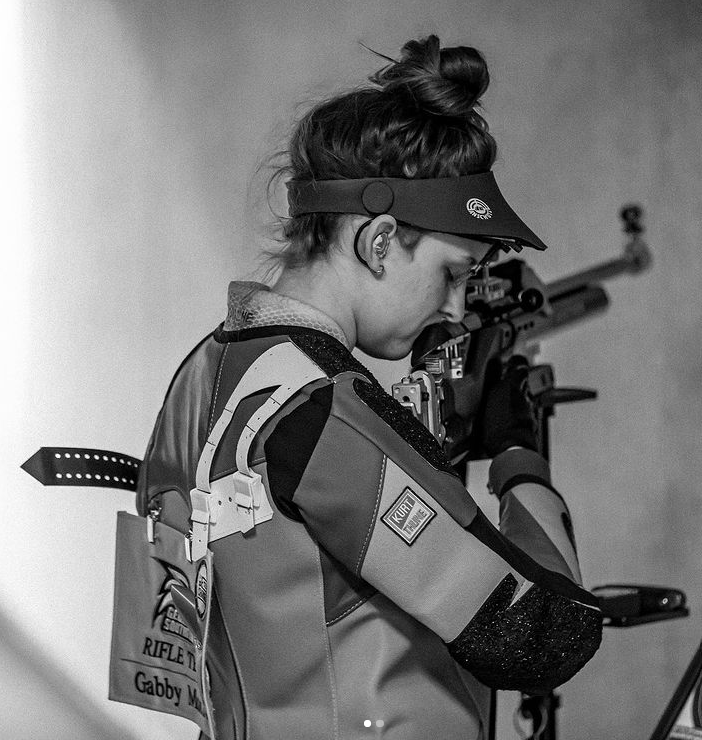
Now, while my advice is primarily coming from the perspective of a rifle athlete, this can apply to other sports as well. Starting off, my biggest piece of advice is, TAKE TIME OFF. Yes, you read that correctly. If you only take one thing from this blog post, take this part. I learned this the hard way as I had this belief in my head that if I wanted to be successful during my freshman season, I had to train hard all summer. This was definitely not the case as I ended up being exhausted early on in the season. There is this misconception that says if an athlete wants to be good, they must train 24/7... This is not the case. In fact, training hard all the time can actually have more negative effects on your performance than positive.
Now, I'm not saying you're not allowed to train the whole summer. In fact, I am a firm believer that summer training is extremely beneficial due to the minimal amount of competitions. It is a good time for athletes to make larger adjustments and actually have a good amount of time to adjust to these changes. While I am mainly speaking to rifle athletes as it is what I am most familiar with, I believe that no matter the sport you play, breaks are both beneficial and necessary.

2. Ask Questions
When talking with one of my fellow college rifle athletes, Bryce Ward, he stated that it is so important to talk to those already in college, as well as athletes who are further along in their careers than you are. Getting advice from those who were once in the same position you are currently in can be so helpful with you being able to get an idea of what to expect and how to better prepare for your college-athlete experience. Bryce said, "Reach out to college athletes, better shooters, ask questions, they will help. Shooting is such a small community and most everyone will help out". While Bryce is talking specifically about the shooting sports, this is a general piece of advice that can be beneficial for any athlete in any sport.
3. Don't Compare Your Social Life to Non-Athletes
This piece of advice is something I had to learn the hard way. While it is a common joke among the athletic community, the "sorry I can't, I have practice" is so much more. It's a common reason we are unable to hang with friends. Especially during my freshman year, I felt detached from my friends who were not athletes. I felt bad that I was rarely able to hang out with them and felt envious when I would see posts from them of all the cool places they'd go and things they were
doing. I would usually think, "I wish I had time to do that". This piece of advice was given to me by Emily Zaslawsky, a former college volleyball player and someone I highly look up to. She also hosts a podcast, "More Than My Stats". I highly recommend you listen as she heavily discusses athlete mental health and brings in current and former college athletes to discuss these important topics that are rarely brought up in the sports community.

When talking to Emily about her experiences on this topic, she said she found herself comparing her social life and schedule to non-athletes and even other student-athletes. Emily said, "Freshman year means a lot of people are staying on campus. I roomed with an athlete but I had six other suitemates and none of them were athletes. I found myself spending a lot of time thinking I'd be happier or making more friends if I wasn't so busy, and found myself idealizing the non-athlete experience". When Emily said this, it was something that heavily resonated with me. Between classes, tutoring, workouts, practice, homework, and so much more, our days are pretty packed, giving us little to no time to do anything else during the day. My sport, rifle, is considered a winter sport by the NCAA even though our competition season starts anywhere from mid-to-late September/ early October and goes to early March. Emily said that while her sport, volleyball, is a fall sport, she found herself comparing her life to other athletes who were a part of sports that took place at different times of the school year. "I roomed with an athlete in a spring sport so when I started college I was hitting the ground running in-season, when she was starting in her off-season. I found myself comparing my experience to everyone else's. I felt like I didn't belong, in reality talking to more athletes and non-athletes later, freshman year is an isolating and confusing time for a lot of them and I wish I wouldn't have spent so much time comparing".

4. Being a College Athlete May Not Be Like What You Expected Based on Your Visit
Official/unofficial visits are amazing opportunities. I can confidently say that I think these are times in an athlete's life they will never forget. I still remember the visits I took when I was trying to find my new home. Sitting here now, about to enter my third season as a college athlete, I can say that my college athlete experience isn't exactly like how I thought it would be based on my visit. Now, I am very fortunate to have a coach that heavily stresses transparency to recruits. She wants them to have a good idea of what they are getting themselves into. That being said, they are also a coach trying to get a recruit on their team... So they may go that extra mile to "wow" the recruits. This was another topic brought up by Emily. She said, "Coaches have to wine and dine you during recruiting and may stretch the truth". Coaches are trying to show you all the amazing moments that come with being a student-athlete. They are trying to sell it to you, so it is understandable as to why they do not include some of the lows that come with the package.
I don't mean to scare you when I say "lows" but it is something I want you to be aware of. Being a student-athlete is not always glorious. While there are many incredible moments and opportunities that come with the title. Hard times are a given and I just want you to understand that it is okay to reach out and ask for help. Emily reflected back on her visits to schools and what coaches said and compared it to the reality of her freshman year. She said, "My freshman year I entered with expectations that I would have an immediate impact playing based on what my coaches were telling me and what the roster looked like. We had a senior transfer in the summer before my freshman year with the intention of starting and I was blindsided and didn't go in with proper expectations". Emily continued and said, "My experience isn't abnormal, I had teammates on my club team who were both recruited to the same position at the same school where the coach told them that they were going to have their ideal position and their teammate would have a different one. Obviously both couldn't be true and they both ended up transferring as they weren't happy with a few other things as well but it definitely didn't start them off on the right foot". I'm not saying that every collegiate athlete will share this experience, although it is common.

5. It May Take a Toll on Your Mental Health, But There Are Resources and You Are NOT Alone

Student-athlete mental health is such an important topic that is not discussed as much as it should be. When talking with Kaylen Buschhorn, the founder of "More Than Just Balls", she praised "The Hidden Opponent' for the open conversations they are having regarding mental health. While I was very sad at times throughout my middle school and some of my high school years, it was never anything I paid a lot of attention to and never went to see a therapist about any of it. That was until I got to college and the constant busy, yet repetitive schedule really made me feel like I was drowning in a constant loop. It was difficult, but I decided to reach out and seek help. After talking with a therapist, they told me that it seems that I was suffering from anxiety and depression. I continued to seek help and I realized it had a positive impact on my mental and physical health. Just having someone to talk to about my life in general was incredibly helpful and is something I am glad I did. There is a stigma that surrounds mental health and asking for help, but in my eyes and so many others, asking for help makes you incredibly strong.


6. Teams Won't Always Be Like Family and There's Nothing Wrong with That
Something that really stuck out to me on my visit to Georgia Southern was when my Coach said, "I can't promise you a family. However, I can promise you respect". The reason this stuck out to me was because she was so honest about how if I chose Southern, there was no guarantee that my teammates would become like my family. This is the case no matter where you go or what sport you play. The team you are on may not be like family and that's okay. What is important is that your teammates are respectful towards one another.
I thought this piece of advice was important to mention because when I asked fellow student-athletes about what they wish they'd known, someone said that he wished he had known about how much the community would become a family. This shows that every athlete's college career goes differently. I am blessed because I have teammates that are now my best friends and I love my teammates dearly. However, for some that is not the case and I want you to know that is perfectly fine and there is nothing wrong with you or your teammates.
Mentions:
Thank you to everyone who helped in contributing to this blog post!
Bryce Ward
Instagram: https://www.instagram.com/the_bryceward/
Twitter: https://twitter.com/the_bryceward
More Than My Stats
Website: https://morethanmystats.org/
Instagram: https://www.instagram.com/morethanmystats/
Twitter: https://twitter.com/MoreThanMyStats
More Than Just Balls
Website: https://www.morethanjustballs.com/
Instagram: https://www.instagram.com/morethanjustballs/
Twitter: https://twitter.com/morethanballs
The Hidden Opponent
Instagram: https://www.instagram.com/thehiddenopponent/
Twitter: https://twitter.com/hidden_opponent


Comments